Your First Briar Pipe: A Beginner's Checklist Before You Buy

A first briar pipe is a small purchase with a long shadow. Get it right and you will spend your first few months learning to pack, tamp and sip — which is quite enough to be getting on with. Get it wrong and you will spend them fighting gurgle, heat and a pipe that hangs off your jaw like a bag of nails. The reassuring part is that the things that really matter are mostly measurable, and nearly all of them can be checked before any money changes hands.
Beginners tend to buy bowls that are too big, because a big bowl looks generous and generous looks like value. In practice, a large chamber gives you more tobacco than your technique can manage, and a longer smoke than your first attempts will enjoy. Start in the middle: a chamber roughly 18–20mm across at the top and 30–38mm deep is forgiving, holds a sensible half hour, and suits most blends.
Bowl shape matters less than bowl size, but it does steer flavour. Narrow, taller chambers concentrate Virginia and flake blends and keep them sweet. Wider chambers let the leaf mingle, which flatters English and Balkan mixtures. Wall thickness is the other number worth eyeballing: aim for at least 5mm at the thinnest point. Thin walls heat up fast, and a pipe that gets uncomfortably hot in the hand will get uncomfortably hot in the mouth.
Everything that makes a pipe smoke dry lives in the drilling. The draught hole should meet the bottom of the chamber, ideally just a whisker above dead centre. If it enters high up on the chamber wall, every bowl will leave a soggy dottle and gurgle halfway down.
Ask to hold the pipe and test it empty. Draw on the stem with the bowl clear: the resistance should feel like a drinking straw, not a whistle and certainly not a blocked pipe. Then ask for a pipe cleaner and run it gently from the mouthpiece through to the chamber. It should pass with a light twist. If it jams, something is misaligned, and that misalignment will collect tar and moisture for the life of the pipe.
A pipe that draws well flatters your technique. A pipe that draws badly will convince you that you are the problem.
Check the stem fit as well. It should push home snugly with a slight friction, sit flush against the shank with no lip, and not wobble when you hold the bowl and gently turn the mouthpiece. A stem that is loose now will only get looser.
Weight is personal, but the useful range for a first pipe is roughly 30–50g. Under 30g can feel flimsy in a full bent; over 55g is a pipe you hold rather than clench, and clenching is one of the joys of the hobby. Balance matters as much as the number on the scales — a well-balanced 45g pipe will feel lighter in the jaw than a badly balanced 35g one.
Straight pipes hang forward and need your teeth to do more work. Gentle half-bents rest more naturally and are usually the easiest introduction. Full bents are comfortable in the mouth but demand good drilling, since moisture has further to travel and more opportunity to pool. For a first briar, a straight or half-bent in a medium size is hard to beat.
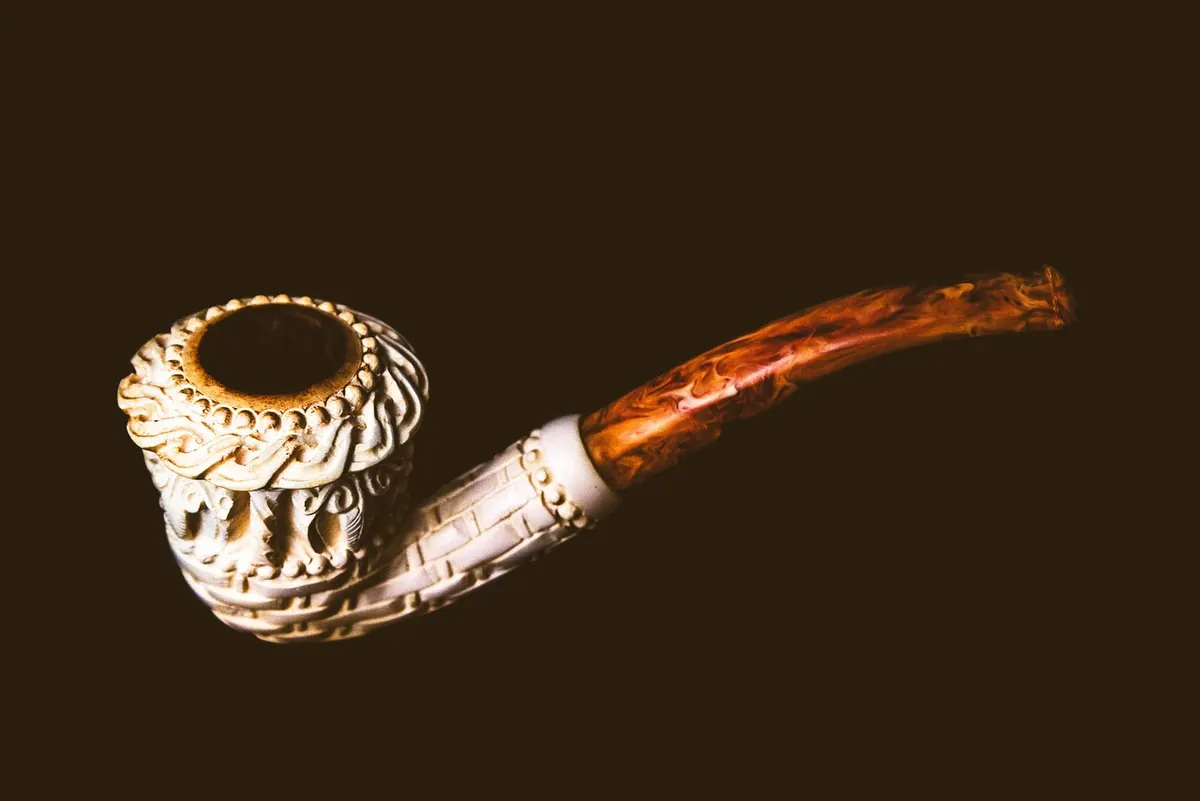
Smooth finishes show off grain, and they also show off fills — small putty patches where nature left a flaw. Fills are cosmetic, not structural, and a smooth pipe with a couple of discreet fills should cost less than a flawless one. Rusticated and sandblasted pipes hide those flaws, which is exactly why so many excellent first pipes are textured. Choose the finish you like, but do not pay a premium for grain on a pipe you intend to learn on.
Decide your budget before you go shopping, and remember what you are buying at each level. At the modest end you are paying for sound drilling and honest materials, which is precisely what a beginner needs. Spend more and you buy better grain, finer finishing, brand heritage and hand work — real pleasures, but not necessarily a better smoke. Many experienced smokers will tell you their cheapest pipe smokes as well as their most expensive one.
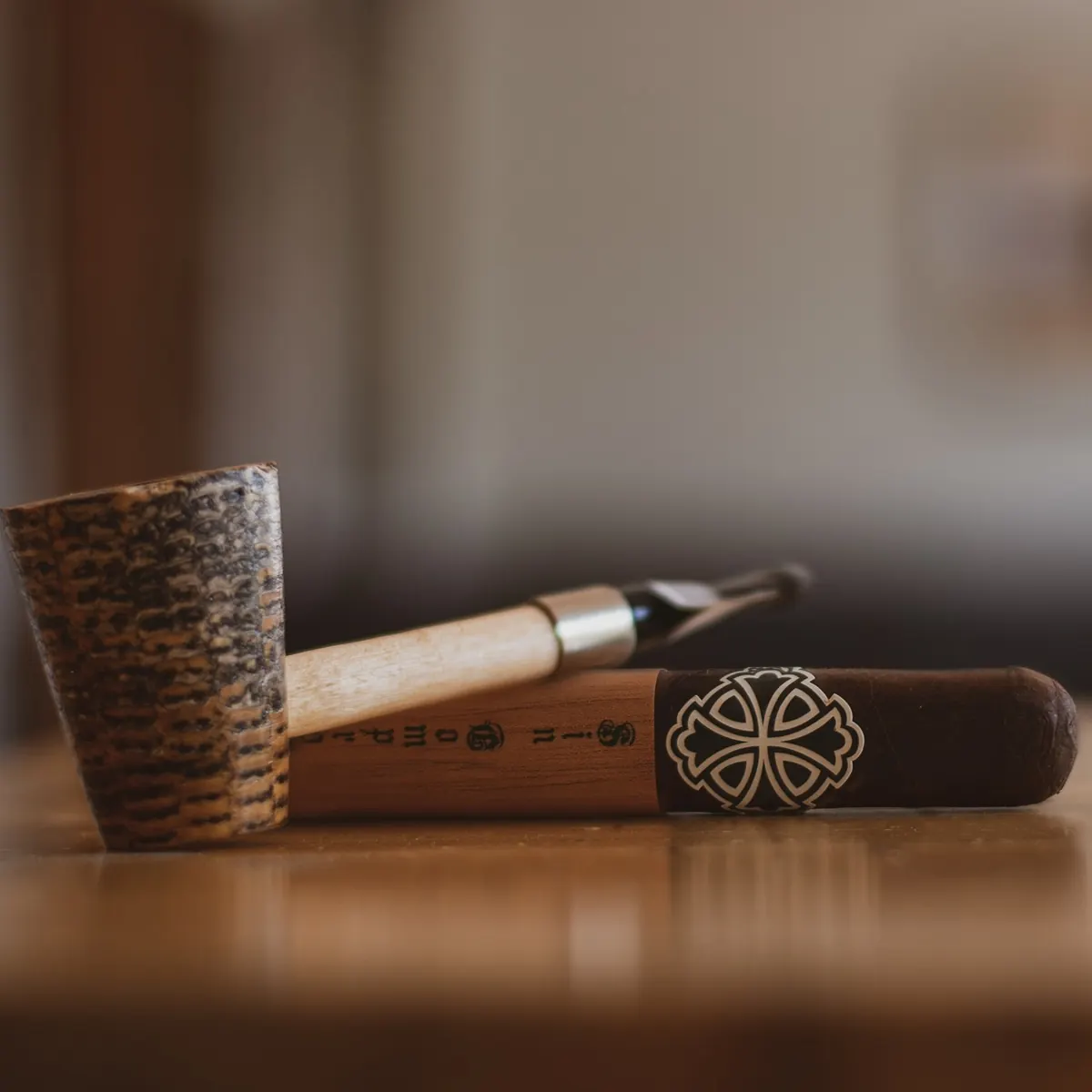
Two sound pipes at a modest price will serve you better than one expensive pipe, because briar needs a day or two of rest between smokes to dry out. Estate pipes are excellent value if you inspect them properly, and a corn cob makes a cheap, genuinely good training pipe while you learn to pack and tamp.
Things to walk away from: pipes in unknown woods sold as briar, heavily painted bowls, and anything with a metal filter system you cannot clean. And a plain note, since this is a smoking hobby: tobacco is harmful to health, and if you do not already smoke, the best decision is not to start. If you do smoke, keep it a deliberate pleasure rather than a habit.
Your first briar does not need to be your last, and it does not need to be perfect. It needs to draw cleanly, sit comfortably and be forgiving of a beginner's packing. Buy from somewhere you can ask questions, whether that is a proper tobacconist or a reputable online seller with a clear returns policy. Take the pipe home, fill it loosely, smoke it slowly, and clean it while it is still warm enough to wipe. Rest it a day, then do it again. The pipes you love later are usually the ones you understand first, and understanding starts with a checklist like this one.
Photo: ignartonosbg / Pixabay