Briar vs Meerschaum vs Corn Cob Pipes: A UK Smoker's Comparison
Three materials cover almost every pipe a British smoker is likely to own. Briar is the familiar one, meerschaum is the one behind the glass, and corn cob is the one in the toolbox. Choosing between them is less about quality than about what you want the pipe to do: how often you'll smoke it, what you'll put in it, and whether you mind it looking battered.
Get the material right and everything else — shape, finish, maker's name — becomes a matter of taste. Get it wrong and you'll spend a year fighting the pipe.
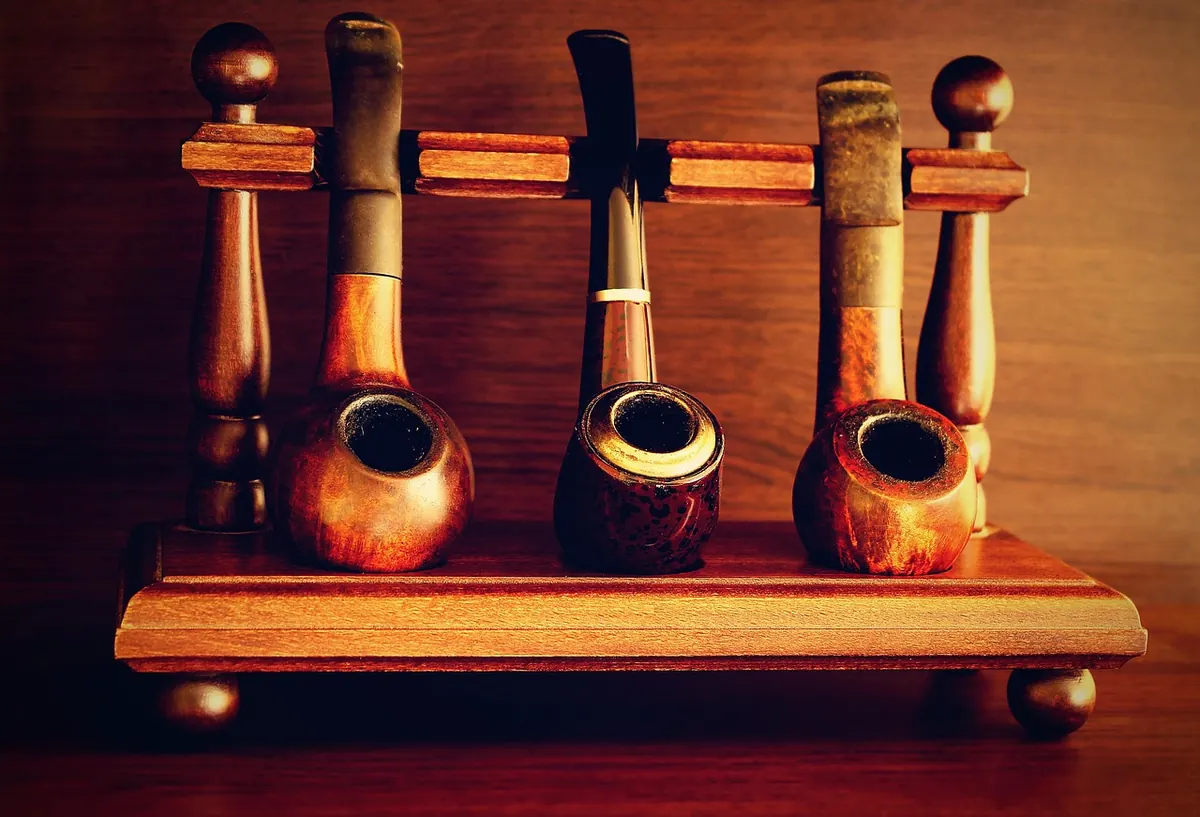
Almost every traditional pipe is briar, and there's a reason. The wood comes from the root burl of Erica arborea, a heath shrub growing around the Mediterranean. It's dug, boiled, then dried for months — or, in better workshops, years — before it's cut. That slow curing gives you a material that's dense but porous: it soaks up moisture without going soft, resists heat, and gradually builds the carbon cake that protects the bowl.
In the hand, briar feels substantial. In the mouth, it adds a faint woody warmth to whatever you're smoking, which is either character or interference depending on your taste. A well-made briar smoked gently will taste better at bowl fifty than it did at bowl five. Few materials reward patience like that.
The catch is that briar needs rest. A pipe that's just been smoked holds heat and moisture in the wood, and lighting it again the same hour is how you scorch a bowl. Most daily briar smokers keep a rotation of three or four pipes, each resting a day or more between outings. Briar also ghosts, particularly with heavily flavoured aromatics, and overheating can burn a permanent bitter note into the wood that no amount of cleaning will shift.
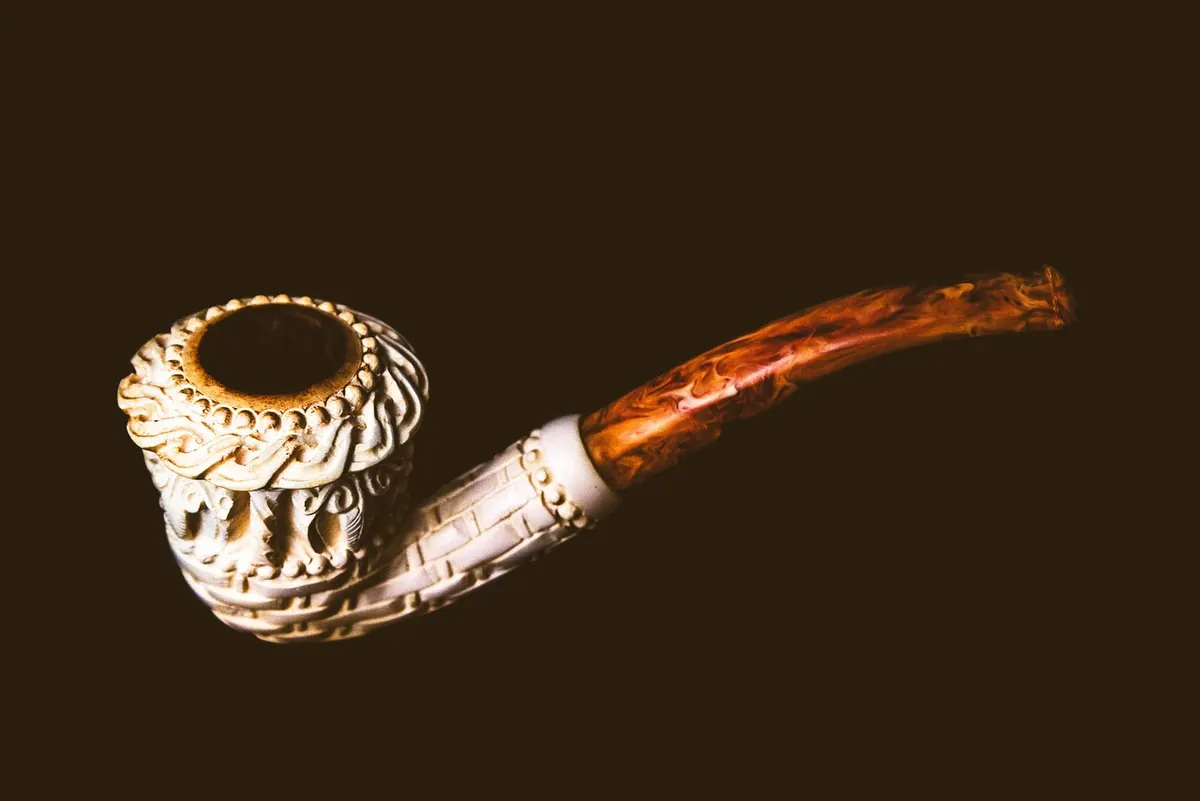
Meerschaum is a soft white mineral — sepiolite, largely mined in Turkey — carved while damp and hardened as it dries. It weighs a fraction of briar, so a large meerschaum billiard feels as light as a small briar, and it's the most neutral material you can smoke. No woody note, no sweetness, just the tobacco.
The famous quality is the colouring. Meerschaum starts near-white and moves over hundreds of smokes through cream, honey and amber towards deep reddish brown as tars work into the mineral. It happens unevenly — the shank and heel colour first — and no two pipes end up alike. Some smokers chase that transformation. Others find it takes too long to be worth the fuss.
Fuss is the right word, because meerschaum is brittle. A drop onto a hard floor usually ends the pipe. Many have a threaded tenon, and cross-threading it once can crack the shank. You shouldn't let cake form at all: wipe the bowl with a twisted paper towel after each smoke, handle the bowl with clean hands so the colouring stays even, and treat it as a warm-smoking pipe rather than a hot one. In exchange you get a smoke that's dry, cool and utterly true to the blend.
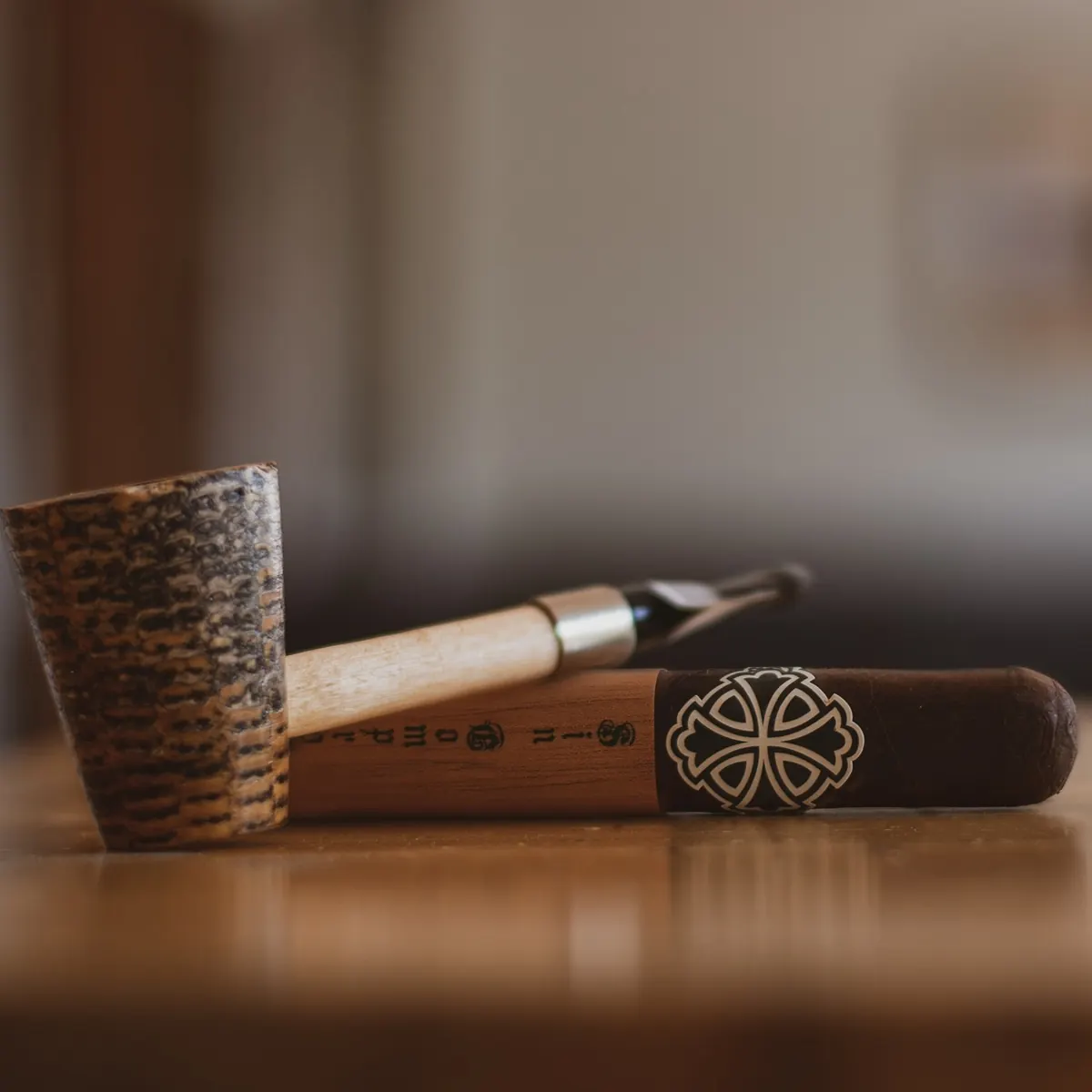
A corn cob pipe is a dried cob, hollowed out, fitted with a wooden shank and a hardwood plug in the base, then sanded. Missouri Meerschaum in the United States makes most of them. They cost a fraction of a briar and smoke cool and dry, because the cob absorbs moisture like blotting paper.
Some cobs are plaster-coated inside and out, which makes them tougher but mutes the flavour. Uncoated ones taste faintly of sweet corn for the first few bowls. That fades, and plenty of smokers miss it when it's gone.
Cobs break in almost immediately — two or three bowls and you're away. They don't need resting, so one pipe can cover an entire evening. The trade-off is lifespan: a cob smoked hard every day will eventually burn out around the shank, and the wooden fittings can loosen. At the price, that's a disposable pipe, and it's a fine way to sample a strong blend, smoke outdoors in the garden, or hand a beginner something that won't punish a heavy hand.
Briar holds heat and needs rest between smokes. Meerschaum runs warm but stays dry and neutral. Corn cob runs coolest and driest of the three, simply because it drinks the moisture.
Cob is the most neutral cheap option and ghosts least. Meerschaum is neutral and slow to hold onto a flavour. Briar adds the most character — welcome with Virginia and English blends, less welcome when you're switching between a Latakia mixture and a cherry aromatic in the same bowl.
Cob: instant, short-lived. Meerschaum: instant to smoke, decades to colour properly, fragile throughout. Briar: several weeks of careful smoking to build cake, then decades of service if you rest it.
If you're building a rack from scratch in the UK, buy briar first. A modest, well-drilled briar will handle most blends and last years with a little discipline. Add a corn cob for outdoor smoking and for testing anything you're unsure about. Add a meerschaum later, once you know which two or three blends you actually smoke and don't mind devoting a pipe to them.
If you only ever own one pipe, make it briar, keep it clean, and give it a day off. And be clear-eyed about the rest: pipe smoking carries genuine health risks, including cancers of the mouth and lung, so if you're weighing up whether to start or stop, that's a conversation for your GP rather than a tobacconist.
Photo: Ernest_Roy / Pixabay
Previous Post
Pipe Stands and Racks: A Checklist for Storing Your Collection
Next Post
Pipe Rotation Explained: How Resting Briar Pipes Improves Every Smoke